
Bedtime Tales
Human is Story & Story is Life

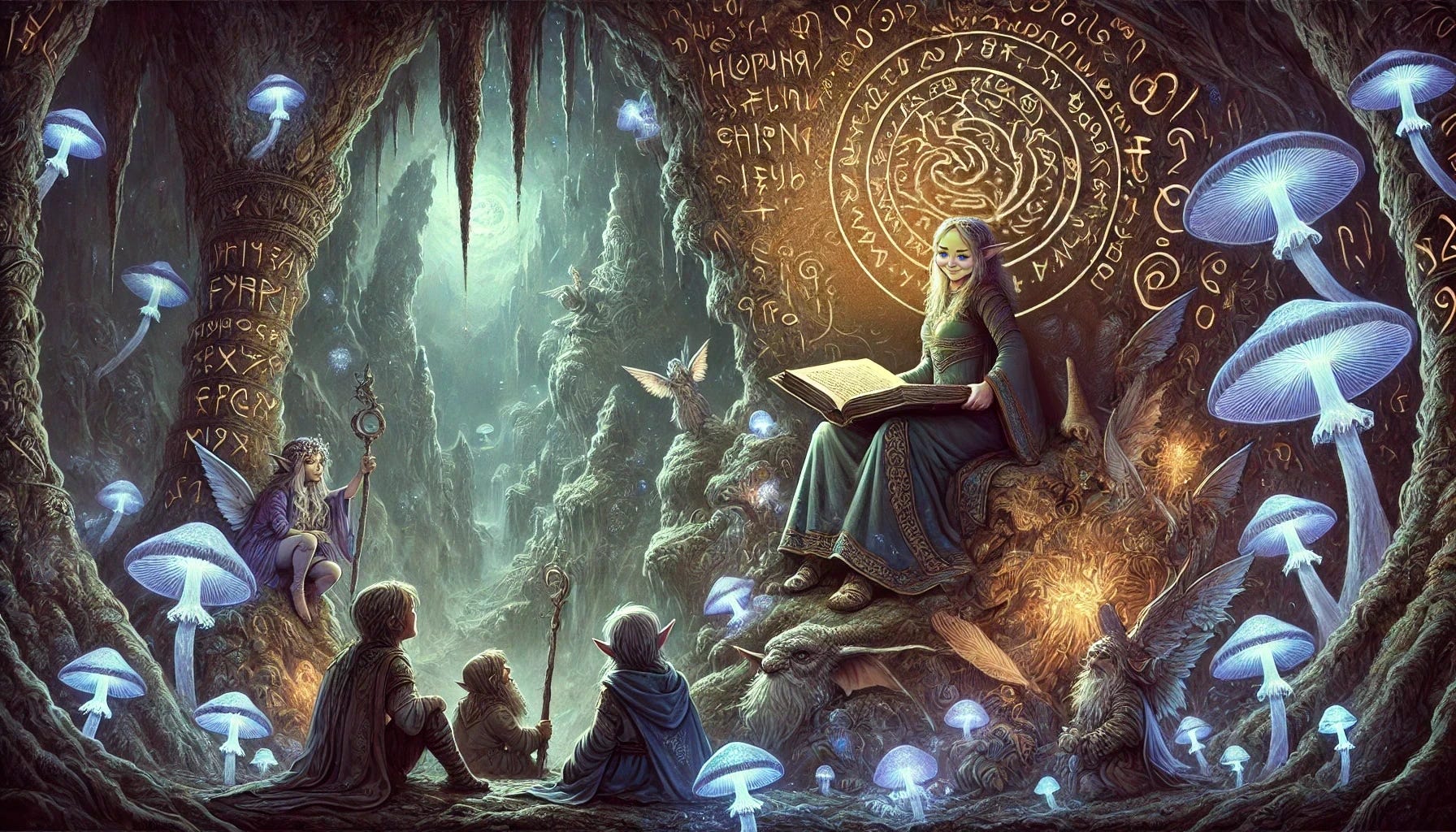
I remember the time when my mom tucked me in bed and started with: “Once upon a time there was a little girl…” I stopped her before she continued further to tell her if she changed the character’s name, I could still tell she was telling me a story about myself! She laughed and continued: “Once upon a time there was a little girl named Madeline…”, a typical mom’s way to give their little ones advice through storytelling. Indeed, those moments have stuck with me to this day!
A pixel away, I was listening to Jenova Chen at a GDC talk, the creative director behind “Journey”, a game that is all about emotions and human connections. He shared how he had the privilege to play World of Warcraft in early alpha, thanks to a friend at Blizzard. But the more he played, the lonelier he felt. Why? He was looking for emotional connections, as he rarely spent time socializing in real life. For him, spending time playing that game was supposed to be a place to seek connection, but instead, he found the opposite. It was all about winning competitions, setting up strategies, looking for loot, and player rankings: are you bronze or platinum? The truth is that, at the end of the day, we all share one common feature: being human. An essential part of it is connecting with the outer world by telling our story.
Chen’s realization resonated deeply with me while I was listening to his talk. Every strong game has an authentic story at its core which speaks to us immediately as we start playing. This is what brings humans together and builds a strong community around that virtual world. This fact raises a crucial question in my mind: How can we build products and experiences that are truly story-oriented? And this question isn’t just limited to game design — it’s crucial that we investigate the answers and solutions for all forms of design, so we can reach the aim of creating a meaningful user experience.
The Human Narrative Instinct
To understand why storytelling is so powerful in design, I want to share a great work by Jonathan Gottschall: “The Storytelling Animal”. Jonathan argues that humans are wired for story, and our minds constantly seek narrative structure, even in the most mundane aspects of life. This innate storytelling instinct shapes our perceptions, decisions, and interactions, blurring the line between reality and the stories we tell ourselves. This is why I chose the topic: “Human is Story!” From cave paintings to modern virtual reality experiences, humans have always found ways to tell and share their stories. Why? Because we need to connect. Storytelling is an authentic way of getting close to each other, moving boundaries and exchanging emotions.
I also came across a short interview with Whitney Quesenbery about her work “Storytelling for User Experience”, where she emphasizes that humans are more than just zeros and ones — stories reveal the human element behind these cold facts. They add meaning to context, allowing us to design better products and create more effective solutions. I can relate these principles of storytelling in user experience design to what game designers aim to achieve — creating immersive worlds that users can connect with emotionally. It is also important to point out that stories are not always supposed to be complete; starting from a place and closing at an end point. They can even be easier to follow and relate to when they come in a variety of forms, like imagery of fragments that come together and give us an anecdote about who we are at that very moment. I also believe spontaneity and randomness in storytelling give it more human quality.
The Hidden Drivers of User Behavior
Let’s point out the concept of a user story in design: “A type of person does a thing for a reason.” While this framework is useful, it’s the rich details of a story that truly illuminate the context, rationale, and motivation behind user actions. Is a user completing a task out of obligation or enthusiasm? The answer to this question can dramatically shift our design approach.
Storytelling always remains a constant in human-centered design, which is the main draw of innovation and creativity. Life is an ongoing story, and we are instant storytellers. By using the emotional and cognitive impact of narratives, we can design more meaningful, engaging, and successful products across all disciplines.
From those bedtime stories my mom told me to the games that I play today and those I am willing to design, the power of narrative remains constant. Our challenge and opportunity is to use this fundamental human trait, creating experiences that don’t just inform or entertain, but truly connect.
Embrace your “being”!
References
https://www.scientificamerican.com/blog/literally-psyched/the-storytelling-animal-a-conversation-with-jonathan-gottschall/
Storytelling for User Experience: Whitney Quesenbery at the STC Summit